

Owners' Indifference Creates Opportunities for Waste, High Maintenance Fees, and Declining Property Values
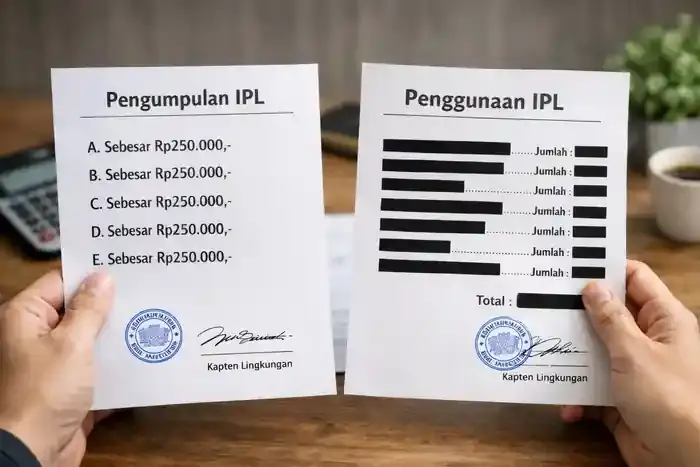
The erosion of an apartment's value does not always begin with structural damage, peeling wall paint, or frequently malfunctioning elevators. Some forms of deterioration occur far more quietly, yet their consequences can be even more serious: the breakdown of financial governance caused by owners' indifference to the financial reports of the P3SRS, the apartment owners' association responsible for managing shared interests and facilities.
Ironically, despite the substantial investments they have made in their apartment units, many owners are reluctant to read the financial reports of the organization managing their shared interests. There are various reasons for this. Some feel they do not understand accounting terminology, others consider financial reports too complicated, while some are perfectly capable of reading them but are simply unwilling to make the time.
Financial reports, however, are not merely piles of numbers prepared to fulfill administrative requirements. They contain clues about where residents' money goes, how much is spent on operating costs, how budgets are used, and whether those expenditures are reasonable in relation to the services received.
When owners refuse to read financial reports, they are effectively handing over one of their most important oversight tools to the very people they should be monitoring.
The High Cost of Ignorance and Indifference
Apartment owners do not need to become accountants to oversee the P3SRS's finances. They do not need to master every accounting standard or be capable of preparing financial statements themselves. However, they should at least be willing to read, ask questions, make comparisons, and request explanations for figures that do not make sense.
Why have maintenance costs increased? Why were certain activities charged to the budget? Are vendor contracts still competitively priced? Are the charges consistent with the work actually performed?
Questions like these are fundamental to effective oversight.
The problem is that when residents do not read financial reports, these questions are never asked. Figures are accepted without scrutiny. Expenditures are assumed to be reasonable simply because they appear in the reports. Increases in the Environmental Management Fee (IPL) are accepted as unavoidable, even though not all owners understand how the new amounts were calculated.
In such circumstances, professionally managed organizations lose a critical partner in oversight. Conversely, if individuals with personal interests are involved, weak oversight can create greater opportunities for inefficient decisions, inappropriate spending, and even abuse of authority.
This does not mean that every management committee left without supervision will inevitably engage in misconduct. However, sound governance must not depend solely on individual honesty. An effective oversight system must ensure that every expenditure can be properly justified and accounted for.
Financial Reports May Look Healthy While Concealing Underlying Problems
One important point must be understood: reading financial reports alone may not be enough to uncover every problem.
Financial reports can be neatly presented, look professional, and even indicate an apparently healthy financial position. However, a convincing presentation does not automatically prove that all expenditures have been made economically, efficiently, and in the best interests of the owners.
This is where we need to understand what might be called financial statement cosmetics, meaning the presentation or classification of figures in ways that make the financial condition appear better or less concerning than it actually is.
Financial statement cosmetics do not necessarily constitute manipulation or a criminal offense. Certain accounting policies may be entirely legitimate. Problems arise, however, when the presentation obscures important information, makes the actual financial condition difficult to understand, or conceals issues that owners should know about.
For example, an expense may be recorded under an overly broad account category, making its nature and purpose difficult to identify. Project costs may be presented as one large figure without a breakdown of the work performed. Routine expenses may increase without an adequate explanation of changes in the scope of work or the quality of services provided.
Under such circumstances, the financial statements may still appear balanced. Income and expenses are recorded. The cash balance can be calculated. Yet a more important question may remain unanswered: is the owners' money actually being used in their interests and in the most efficient way possible?
For this reason, oversight must not stop at financial reports. Owners need to examine the connections between financial statements, budgets, vendor contracts, transaction records, completed work, and the quality of services received.

Recorded figures do not necessarily reveal the full reality behind them.
High IPL Fees Do Not Always Mean Better Apartment Services
Indifference toward financial reports can have a direct impact on the amount owners pay in IPL fees.
In principle, apartment management costs should be based on clearly explained needs, reasonable budgets, and expenditures that can be properly justified. IPL fees should not be determined merely because the management committee proposes an increase or because residents regard such increases as routine.
When expenditures are not scrutinized, operating costs that could actually be reduced may continue to grow. Vendor contract prices may not be adequately reviewed. Certain work may be carried out without proper planning. Projects may be proposed without sufficient needs assessments, comparisons of competing bids, or evaluations of their expected benefits.
As a result, management costs increase, while service quality does not necessarily improve.
The situation becomes even worse when owners are simply asked to pay IPL fees without receiving transparent explanations of how the money is used. They bear the financial consequences but lose the ability to assess whether their payments are proportionate to the benefits they receive.
Over the long term, this situation can create a vicious cycle. Management costs rise, residents feel increasingly burdened, trust in the management committee declines, and the management's ability to maintain service quality comes under greater pressure if high costs are not matched by effective management.
Projects Without a Sound Rationale Can Become a Burden on Owners
Another equally important issue is spending on projects.
Apartments require ongoing maintenance and repairs. Elevators, water pumps, electrical systems, fire safety installations, clean water networks, and various other facilities require continuous attention. Not all project expenditures can be avoided, and not every high-value project represents waste.
However, every project should have a clearly established need.
What problem is the project intended to solve? Is the work urgent? Are there more economical alternatives? Are the proposed prices reasonable compared with market rates? Who verifies the completed work? Do the results meet the specifications and contractual value?
If these questions are not asked, owners risk bearing expenses that do not deliver commensurate benefits.
Even genuinely necessary projects can become excessively expensive if procurement is not competitive, specifications are inappropriate, supervision is weak, or the quality of the work does not justify the amount paid.
This is why financial oversight must go beyond checking whether a transaction has been recorded. It must also assess the reasons for the expenditure, the fairness of the price, the decision-making process, and the results of the work.
The money spent from the P3SRS's funds ultimately comes from owners' contributions or other shared sources of income. Every rupiah spent inefficiently reduces the resources that could otherwise be used to maintain and improve the property's quality.
High Management Costs Can Undermine Resale and Rental Values
This is where financial management meets investment performance.
Apartment owners generally expect their units to provide comfortable living, command a reasonable resale price, or generate attractive rental income. However, an apartment's value is determined by more than its floor area, location, view, or available facilities.
Building condition, management quality, security, cleanliness, the reputation of the surrounding environment, and the cost of ownership all influence its attractiveness in the market.
Consider two apartments with broadly comparable locations and facilities. The first has transparent management, controlled operating costs, and consistent maintenance. The second has high IPL fees, expenses that are difficult to explain, and facilities whose quality continues to deteriorate.
Rational prospective buyers will naturally take these differences into account.
For investors purchasing units to rent out, IPL is one of the cost components that affects net income. The higher the costs borne by the owner, the lower the net rental income remaining, assuming all other factors stay unchanged.
Meanwhile, for prospective buyers who intend to live in the unit themselves, high monthly fees can make the property less attractive, particularly when the quality of services does not justify the cost.
If these conditions persist, the apartment may lose its competitive edge against comparable properties. Owners may have to lower their asking prices or accept lower rental income to keep their units attractive to the market.
Of course, an apartment's selling price is not determined by IPL fees alone. Location, property market conditions, building age, unit supply, transport access, and other economic factors also play a role. Nevertheless, poor financial management can intensify the downward pressure on property values.
Owners who neglect financial oversight today risk facing a decline in their property's investment appeal in the future.
Oversight Is Not the Sole Responsibility of the P3SRS Supervisory Board
Some owners may believe that financial matters are entirely the responsibility of the P3SRS management committee and supervisory board. This view needs to be corrected.
The management committee is responsible for managing the organization and its finances in accordance with applicable requirements. The supervisory board performs its oversight functions within its authority. However, owners must also exercise their rights to obtain information, ask questions, participate in decision-making forums, and evaluate management accountability through the available mechanisms.
This does not mean that every owner must inspect every receipt or participate in daily operational activities. Good management actually requires a clear division of responsibilities.
Nevertheless, owners need to ensure that oversight mechanisms work effectively and that important information is accessible and understandable.
If financial reports are difficult to understand, ask for an explanation. If costs have increased significantly, request comparisons with previous periods. If a project involves substantial spending, ask about the underlying need, the vendor selection process, and the evaluation of the results.
If discrepancies are found, request clarification through official channels and document the issue. If there are indications of violations, pursue the matter based on evidence rather than mere suspicion or prejudice.
Being critical does not mean being hostile toward the management committee. Objective oversight can actually protect those who perform their duties properly while helping identify problems before they become more serious.
Do Not Wait for the Apartment to Deteriorate Before Taking an Interest
One of the biggest mistakes owners make is reacting only when problems become physically visible. They begin questioning management when elevators frequently break down, cleanliness deteriorates, facilities are neglected, or IPL fees rise sharply.
Yet some of these problems may have shown warning signs years earlier through spending patterns, budget decisions, or inadequate oversight of maintenance contracts.
Physical damage is often a visible symptom. Financial governance problems can be one of the underlying causes that remain hidden.
When maintenance funds are used inefficiently, preventive work may be neglected. When projects are undertaken without proper planning, subsequent repair costs may increase. When financial decisions lack transparency, residents' trust may decline, making cooperation in maintaining the shared environment increasingly difficult.
Therefore, protecting an apartment's value requires more than repainting walls, renovating the lobby, or upgrading facilities that visitors can see. Apartments also need sound financial governance, responsible decision-making, and owners who are willing to exercise their oversight responsibilities.
Ultimately, financial reports are not merely annual documents distributed only to be forgotten. They are one of the tools owners can use to assess whether the property is being managed in the collective interest.
Apartments do not always lose value because they lack money. In some cases, they lose their competitive edge because available funds are not managed effectively, while their owners do not care enough to question how the money is being spent.
Do not wait until IPL fees become increasingly expensive, facilities deteriorate, and your unit becomes harder to sell or rent at the price you expect before realizing the importance of oversight.
When indifference becomes a habit, waste can be treated as normal, high costs can be regarded as inevitable, and declining management quality can continue with little meaningful resistance.
At that point, the consequences are not borne solely by management committee members or supervisors who have failed to fulfill their responsibilities. The people who suffer the greatest losses are the owners themselves.
And often, the greatest losses are suffered by those who believe they do not need to read financial reports because they consider such matters none of their concern.
Read other articles as well:
- Impact of Recession and Fuel Crisis on Residential Communities
- Between Glue Intoxication and Community Hallucinations
- Project Transparency in Communities
- The Role of Buzzers in Communities
- Manipulation Tricks in Community Expense Reports