Reflecting the Meaning of Ramadan in Vertical Housing and the Challenges of Social Donation
Ramadan is a month of reflection, self-control, and the strengthening of social empathy. In Islamic tradition, Ramadan is not merely about enduring hunger and thirst, but a momentum to improve one's relationship with God as well as with fellow human beings. Values of caring, honesty, and responsibility become the main essence that should be reflected in every social activity during this holy month. However, the context of modern life, especially in apartment environments, poses its own challenges in bringing these values to life collectively. Vertical housing often limits interaction between residents, so expressions of social concern are more frequently carried out individually, one of which is through donations.
Minimal Interaction, Donations as a Means of Actualizing Compassion
Many apartment residents come from professional backgrounds with a fast-paced and private rhythm of life. The lack of social space makes traditional mutual cooperation (socialize) difficult to realize. In this situation, donations become the most practical way to remain socially contributory without having to be directly involved in communal activities. Sharing during the month of Ramadan also becomes a form of self-actualization: distributing fortune, fostering empathy, and maintaining social connections, even though it is often done without knowing the parties organizing or receiving the donation closely.
Ramadan Momentum and the Risk of Donation Misuse
Unfortunately, the high spirit of sharing in the month of Ramadan also has the potential to be exploited by irresponsible individuals, commonly referred to as "donation hunters." Narratives of kindness, the urgency of rewards (pahala), and emotional pressure are often used to encourage rapid donations, without room for verification or transparency. This phenomenon is not meant to foster excessive suspicion, but rather as a reminder that good intentions still need to be accompanied by caution. A healthy donation is one that is managed with integrity, openness, and accountability.
Recognizing Donation Patterns to Watch Out For
As a form of social literacy, there are several common patterns that apartment residents should observe to ensure they continue sharing wisely. Here are the points on how to recognize the tricks of donation hunters:
Having no clear primary job or activity
Donation hunters generally do not have a main source of income other than the donations collected regularly as a monthly income.
Using personal or spouse's bank accounts
Donations are transferred to accounts in the name of individuals, spouses, or relatives and are done regularly, rather than into the accounts of legally incorporated institutions/foundations.
No written accountability reports
After funds are collected, no official, periodic, and publicly verifiable reports are provided. Usually, they hide behind the narrative that donors have contributed sincerely (ikhlas) or that it is for religious activities.
Reports are visual, not financial data
Accountability only takes the form of photos, images, videos, or emotional stories, without details of income, expenditure, and balance figures.
Donation activities are vague and shifting
The purpose of the donation often changes from month to month, the planning is not specific, or the narrative is inconsistent between the amount of income and the expenditures used. Often, they use fictitious data that is difficult to verify.
Using excessive emotional language and spiritual lures
Frequently using words like "great rewards," "the path to heaven," or "use this field of merit" to bypass common sense and logic, as well as to avoid report verification.
Rejecting or avoiding critical questions
When asked for clarification, they instead corner the questioner with accusations of being insincere, stingy, unreligious, unsocial, anti-kindness, anti-socializing, or anti-elders, hiding behind religious values.
Conducted regularly and continuously
Donations are requested almost all the time, weekly and/or monthly, but with different themes, while being conducted by the same person or group using the same personal account.
Moving in groups or supporting each other
Several accounts or individuals promote, defend, and shut down criticism of each other to appear credible. The role of buzzers is very significant in this regard.
Also read other articles:
The Role of Buzzers in the Community
- Not officially registered as a social institution They lack legal entity status, operational permits, institutional tax ID (NPWP), or registration with relevant agencies.
No involvement of independent parties
There are no auditors, supervisors, other resident groups, or official partners who can verify the truth of the fund management.
Relying on false urgency
Frequently using phrases such as "today is the last day," "when else can you donate," "while it is a good month," or "for the widows," all without clear data or basis, and the recipients cannot be verified.
These points can help the community remain caring and generous, yet smart and vigilant, so that good intentions are not exploited by irresponsible parties who earn a routine income from hunting donations. Recognizing these patterns does not mean reducing care, but rather ensuring that the spirit of sharing remains on the right track and controlling your finances in today's limited economic era.
Also read other articles:
The Mystery of Invisible Power in Community Management
Ramadan, Compassion, and Social Responsibility of Apartment Residents
Ramadan should be a momentum to strengthen the values of integrity (amanah) and transparency, not only for donation recipients but also for the managers and organizers of social activities. In an apartment environment, social concern is ideally built collectively, openly, and with mutual respect. With proper understanding, apartment residents can continue to share, donate, and worship peacefully, without prejudice, without conflict, and without doubt. Because in the end, the value of worship lies not only in the intention but also in the responsible manner.
FAQ
Is donating through individuals in an apartment environment allowed?
Donating through individuals is in principle not prohibited, as long as it is done voluntarily and does not contain elements of coercion or deception. However, to maintain trust and accountability, residents are advised to request clarity on the goals, distribution mechanisms, and the form of accountability for the funds collected.
What is the difference between social donations and mandatory fees in an apartment?
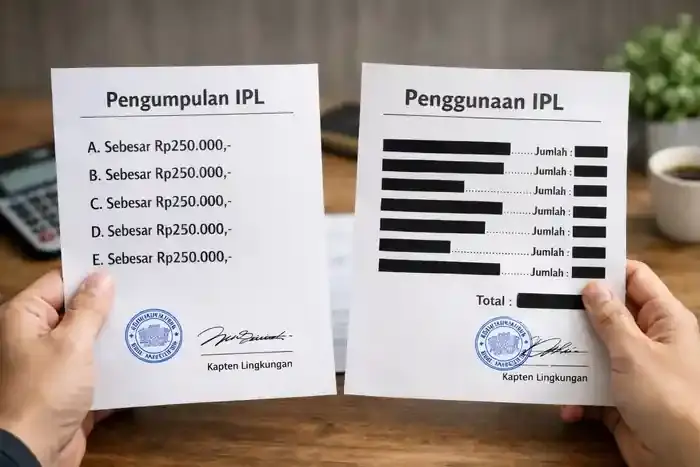
Donations are voluntary and non-binding, whereas fees (such as the Service Charge/IPL) are mandatory and regulated by laws and regulations as well as the P3SRS Articles of Association (AD/ART). Donations must not be mixed with mandatory fees, and their management must be clearly separated.
How to donate safely and responsibly during the month of Ramadan?
Residents can choose to donate through official institutions, social activities with transparent reporting, or collective communities that provide written reports in the form of verifiable figures. The principles of caution, information disclosure, reporting in figures, and accountability are key to ensuring that donations truly benefit collective social life and do not cause conflict.
Also read other articles:
- Can IPL Bills Be Reduced? Absolutely!
- Uncovering Apartment Financial Report Tricks
- PPPSRS Apartment Financial Report
- P3SRS Financial Reports Are Not Dogma: Here's How to Understand Them Correctly