
One Letter, Two Authorities in Community Fundraising
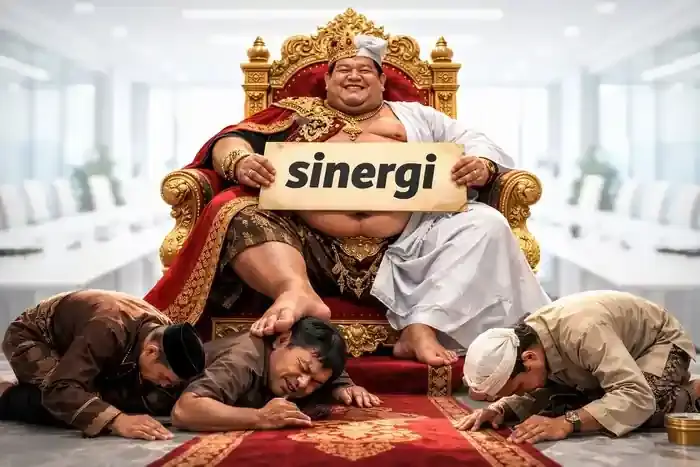
Environmental Synergy or Blurred Responsibility?
In apartment environments as well as RT/RW communities, a practice has begun to emerge that seems trivial but is actually problematic: one letter with two authorities. The letterhead of local administrative bodies (RT/RW/P3SRS) appears alongside the names of external organizations, hobby communities, associations, or other informal groups, used to collect funds from residents. The language used is almost always the same: synergy.
It looks neat: there is a stamp, there is a signature.
But the question is simple:
is this legitimate collaboration, or intentional administrative fog?
Because in governance, the most dangerous thing is not bad intent, but unclear authority that is allowed to operate.
Blurred Mandates: When Formal and Informal Authority Are Mixed
Residential administrative bodies such as RT/RW/P3SRS are community administrative entities, not free-form organizations. They are given space by residents as their shareholders who hold the mandate, and are governed by rules such as bylaws (AD/ART), each with distinct administrative functions. Their roles include: data collection, service, facilitation, and conveying residents’ aspirations. Not for doing business, not for fundraising based on the preferences of certain groups.
On the other hand, communities such as “Senior Cyclists” and “Senior Singers” are voluntary non-structural organizations. Legitimate, legal, and normal. But their legitimacy is horizontal, not structural. They also operate under different supervision, with different functions and responsibilities.
Problems arise when these two worlds are forced together on a single letterhead, without clarity:
Who holds the mandate?
Into whose account do the funds go?
Who is obligated to report?
If problems occur, who is responsible?
In modern governance, this is called blurring of accountability: obscuring responsibility.
In everyday language: “if something goes wrong, everyone can pass the blame.”
Read other articles also:
Borrowed Legitimacy, Real Social Pressure
The RT/RW/P3SRS letterhead is not just a logo. It carries a psychological weight of compliance. When the RT/RW/P3SRS name appears on a fundraising letter:
Residents feel uncomfortable refusing
Refusal is seen as lacking solidarity
The activity feels like an official community policy, even though it is a private activity
When this letterhead is combined with external organizations, one key thing happens:
structural legitimacy is borrowed to strengthen collection power.
This is no longer about cycling or not cycling, dining or not dining, singing or not singing.
This is about who holds symbols of authority, and how they are used.
Comparison: RT/RW vs P3SRS vs Other Communities
To avoid confusion, let’s clarify the differences:
RT/RW
Community administrative body
Service & facilitation functions
Does not have a business fund
Not allowed to collect funds without deliberation and resident mandate
Supervised structurally by the Kelurahan and then Kecamatan.
P3SRS
Legal entity representing owners
Manages shared building interests
Obligated to provide financial reports & accountability
Scope is limited to property and owners
- Supervised structurally by the regional Public Works Office (Sudin PUPR).
Other Communities (e.g., “Senior Cyclists”, “Senior Singers”)
Voluntary organizations
Internal mandate from their own members
No structural authority over residents
Must not “ride on” RT/RW/P3SRS symbols
- Supervision structure depends on the community itself, at the discretion of its founders.
If all three are mixed without boundaries, what happens is not synergy, but opportunistic governance.
Real Losses Often Dismissed as “It Will Be Forgotten Anyway”
1. Financial Loss
Funds collected without a clear mechanism mean:
No detailed reporting
No audit
No resident control
2. Social Loss
Once residents feel exploited:
Participation declines
Apathy increases
Horizontal conflicts emerge
Social trust is not an e-wallet balance.
Once it leaks, it cannot be topped up with banners.
3. Administrative and Legal Risks
Dual-headed letters without a clear mandate can trigger:
Internal disputes
Complaints to authorities
Allegations of misuse of official symbols
Accusations of illegal levies if pressure is involved
So, What Does Proper Synergy Look Like?
Synergy is not about sitting together and printing a new letterhead.
Synergy must be auditable, not just narrated.
Minimum principles:
Resident deliberation and official minutes
Clear separation of roles and responsibilities
Clear and separate bank accounts
Transparent reports that can be requested
No social or moral pressure
Without these, “synergy” is merely a polite term to cover a lack of mandate.
Conclusion: The Community Does Not Belong to Individuals or Stamp Holders
Residents are not fundraising objects.
The community is not the symbolic property of a few individuals.
When one letter carries two authorities, the question is simple:
Is this a collective mandate, or merely borrowing symbols to strengthen donation collection?
The answer determines whether we are seeing healthy collaboration—
or the beginning of social trust erosion at its most fundamental level.
FAQ
1. Can RT/RW/P3SRS collect funds from residents?
Yes, if there is deliberation, a clear mandate, and transparent reporting. Without these, it risks being considered misuse of authority.
2. Can other communities raise funds within the neighborhood?
Yes, under their own name, and then request approval from the administrative mandate holders (RT/RW/P3SRS), without attaching structural authority symbols—resulting in two separate letters: 1 request and 1 approval.
3. Is it allowed to use RT/RW/P3SRS letterhead together with other organizations in one letterhead?
Not allowed without written mandate, bylaws (AD/ART), and clear responsibility, because each has different functions, bylaws, legal basis, member composition, and most importantly different state supervision structures and legal frameworks.
4. What is the biggest risk for residents?
Not only financial loss, but erosion of social trust and prolonged conflict, as well as potential arbitrary actions from free-rider communities, beyond administrative de jure aspects.
5. What is the healthiest stance for residents?
Ask questions. Request reports. Politely refuse if unclear.
Because transparency is not defiance, it is a right. Submit reports to the appropriate supervisory authority—for example, RT/RW issues can be reported to the Kelurahan or Kecamatan regarding dual-letterhead usage. For P3SRS, reports can be submitted to the regional Public Works Office (Sudin PUPR). From this alone, it is clear that each has a different supervisory structure.
6. What if residents’ concerns are still ignored?
The easiest way is to make it viral on social media, including evidence of dual-authority letterheads.
Read other articles also:
- The Mystery of Invisible Power in Community Management
- Project Transparency in Communities
- Income Reports Without Expense Reports?
- The Role of Buzzers in Communities
- The Sleight of Hand in Community Expense Reports