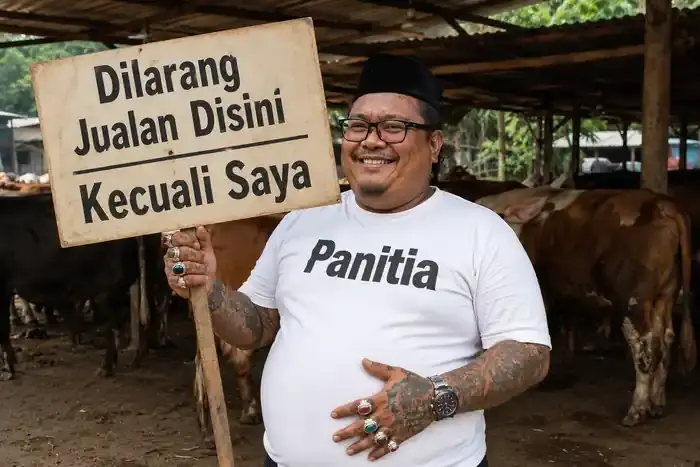

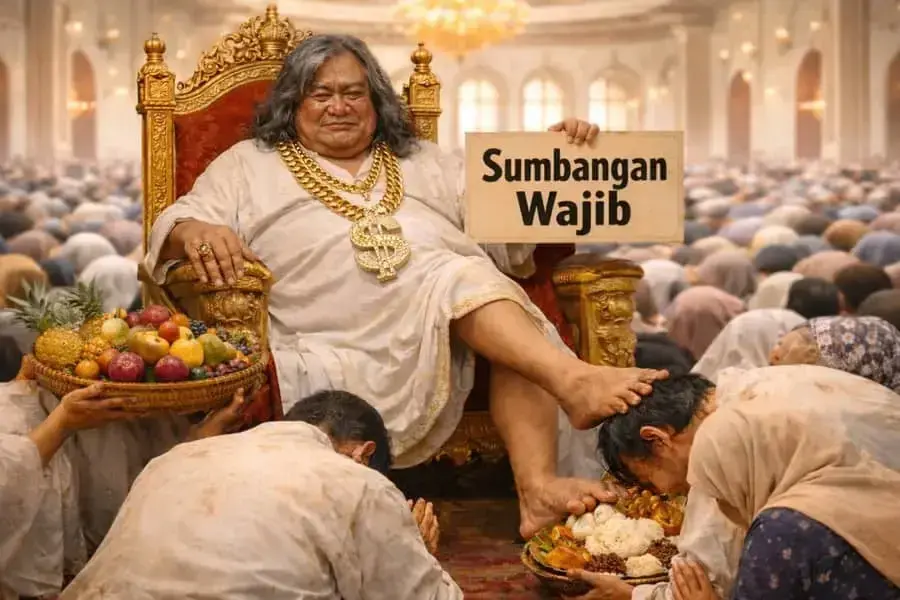
When Solidarity Turns into Social Pressure, in the Neighborhood
In many residential environments, whether in housing complexes, apartments, or gated communities, a social phenomenon often arises that sounds simple yet harbors a paradox: “voluntary but mandatory donations.” In linguistic terms, a donation is a voluntary gift. It is born from willingness, social empathy, and the spirit of gotong royong (mutual cooperation) that is part of the culture of the Indonesian people. However, in practice, the term often experiences a shift in meaning. Donations are still referred to as a form of voluntary concern, but in social reality, they often turn into an unwritten collective obligation. There is no official rule that forces it, but social pressure makes many people feel they have no choice but to refuse. This phenomenon looks small at a glance, merely a contribution of money or goods for neighborhood activities. But if observed more deeply, the practice is often related to more complex social dynamics: the search for social image, a culture of showing off, group pressure, and even collective hypocrisy that slowly erodes the meaning of togetherness itself.
When Voluntary Turns into Social Obligation In community life, donations have high moral value. They are a symbol of care and solidarity among residents. But in the practice of modern residential communities, the pattern that emerges is often almost the same. A neighborhood activity is planned. Then the committee or management starts asking for “donations.” After that, every house or apartment unit is given a turn or a specific nominal amount. Formally, the activity is still called a donation. But in practice, residents often feel they have no choice but to refuse. Social pressure emerges subtly. Residents who do not contribute can be considered uncooperative, indifferent to the neighborhood, or unappreciative of togetherness. Examples that often occur are quite simple: Monday, one unit is asked to donate sand. Tuesday, another unit is asked to donate cement. Wednesday, the next unit donates bricks or other materials. At a glance, this looks like gotong royong. However, if viewed objectively, this practice is actually closer to a collective obligation that was never truly agreed upon together, and is usually for the benefit of certain individuals or small groups.
Read other articles too:
Root Cause: Activities Created, Budget Follows
The "voluntary but mandatory donation" phenomenon often arises from a simple but problematic decision-making pattern. Activities are created first, while costs are thought about later. When the budget is not yet available, residents' donations become the easiest solution. Yet, in healthy community governance, the sequence that should occur is:
- Determining the purpose of the activity
- Drafting a clear budget
- Determining sources of funding
- If there is still a shortfall, then opening for voluntary donations
If this sequence is reversed, what happens is the activity proceeds while the costs are slowly charged to the residents. At this point, donations turn into a disguised social obligation. A simple principle actually applies in almost all healthy organizations: if you do not have a budget, do not create activities that burden others. If the activity must be carried out, the funding should come from yourselves, or clear sources, such as the committee's personal funds, sponsors, or donations that are truly voluntary and discussed beforehand, not in the form of a mandatory donor list.
Social Hedonism in Community Activities
This phenomenon is also often related to something more subtle as: social hedonism. Hedonism in a community context is not always related to personal luxury. It can appear in the form of collective activities that are intentionally made festive, crowded, and look prestigious, at the will of certain individuals or small groups. For example:
- Neighborhood events that are made very luxurious, even though there are few participants.
- Environmental improvements, but for the personal benefit of certain small groups.
- Entertainment stages, or gatherings for the sake of certain small groups.
- Ceremonial activities that are actually not very necessary, such as a promotion graduation of an official.
- Communal eating activities, celebrating the personal interests of certain small groups.
In a situation like this, community activities slowly turn into a stage for social imaging, especially for certain individuals and/or groups. What is showcased is no longer the community's needs, but the impression of festivity, being supported by residents, and magnificence. The problem is, the costs of such activities are often not small. And when the financing of these activities is charged to residents through “donations,” then the donation turns into a tool for financing a collective lifestyle.
Unconscious Social Hypocrisy There is another side that is more subtle but often escapes attention: social hypocrisy. In many communities, the values often spoken of are:
- Gotong royong (mutual cooperation)
- Togetherness
- Solidarity
However, in practice, these values sometimes turn into unconscious social pressure. Residents feel the need to contribute not because of empathy, but because of the fear of being seen as different from the group, or the social pressure of certain groups. In this situation, solidarity is no longer born from moral awareness; it is born from the need to conform to group norms. Whereas true solidarity does not require coercion.
Perspective on Regulation and Residential Governance
In the context of modern housing, especially apartments or flats, community management actually has a fairly clear legal basis. One of them is Government Regulation Number 13 of 2021 concerning the management of flats (rumah susun). This regulation emphasizes the importance of residential management that is transparent, accountable, and based on collective decisions of the residents. This means that various decisions related to common interests, including activities that require collective financing, in principle need to be discussed through a residents' deliberation forum. The deliberation becomes a means to:
- Explain the purpose of the activity
- Present the budget plan
- Discuss funding sources
- And obtain collective approval
Without such a mechanism, decisions taken have the potential to cause misunderstandings, distrust, and even social conflict among residents. Transparency in a community is not just an administrative formality. It is the main foundation for the creation of social trust.
Characteristics of a Healthy Community
A healthy residential community usually has several simple principles in managing joint activities. First, budget transparency before the activity begins. Second, clarity on funding sources. Third, the absence of hidden donation obligations. Fourth, respect for the differing economic conditions of each resident. Social reality shows that everyone's economic capacity is different. What feels light to one person can be a burden to another. Therefore, wise community policies always consider social justice and economic empathy. Community activities should strengthen togetherness, not create new pressures among residents.
Restoring the Meaning of Donation
Ultimately, a healthy donation has three simple characteristics:
- Voluntary
- Without social pressure
- No social consequences if someone chooses not to give
When these three principles are lost, the donation has essentially turned into an informal social levy. In such a situation, it is natural for some residents to start questioning one simple thing: If every resident already pays regular dues for neighborhood management, why do various additional "mandatory-feeling" donations still appear? That question is not a form of indifference toward the environment; it is exactly the opposite. It is an effort to maintain community governance so that it remains healthy, transparent, and fair for all parties. Because in the end, true solidarity is not born from coercion. It is born from the shared awareness that a healthy life as neighbors can only be built through honesty, transparency, and mutual respect.
FAQ
Is it allowed to ask for donations in a residential environment?
Yes, as long as it is truly voluntary and not accompanied by social pressure.
What is the difference between a donation and a due (iuran)?
Dues are mandatory and usually agreed upon collectively through a residents' forum, while donations are voluntary without coercion.
Why is the term “voluntary but mandatory donation” often problematic?
Because the term implies it is voluntary, but the practice is coercive, thus causing social injustice.
Are residents allowed to refuse a donation?
In social principle, donations should be refuseable without stigma or pressure from the community, or threats from buzzers.
How to prevent conflicts regarding donations?
Through budget transparency, open deliberation, and ensuring that donations are truly voluntary. If donations are made consistently and continuously, through the same personal bank account, it is better to viralize it through social media, so that its transparency can be validated by many people.
How to identify an inappropriate donation?
Look at the donation collection account; it is usually the personal account of the same person, either the husband or the wife, and it rotates routinely. It can also be seen from the beneficiaries of the donation results, which are usually individuals or people around a certain small group only, not 100% of the residents, even though it is done in the name of 100% of the residents.
Read other articles too: