
How to Easily Assess the Reasonableness of Elevator Maintenance Costs and P3SRS Financial Transparency
Elevator costs are one of the expenditure components that require attention in apartment management. These costs can reach very substantial amounts and are vulnerable to financial misappropriation. Therefore, residents need to understand how to assess whether elevator maintenance costs are reasonable, so they can determine whether the expenses charged to residents are supported by a sound and logical basis.
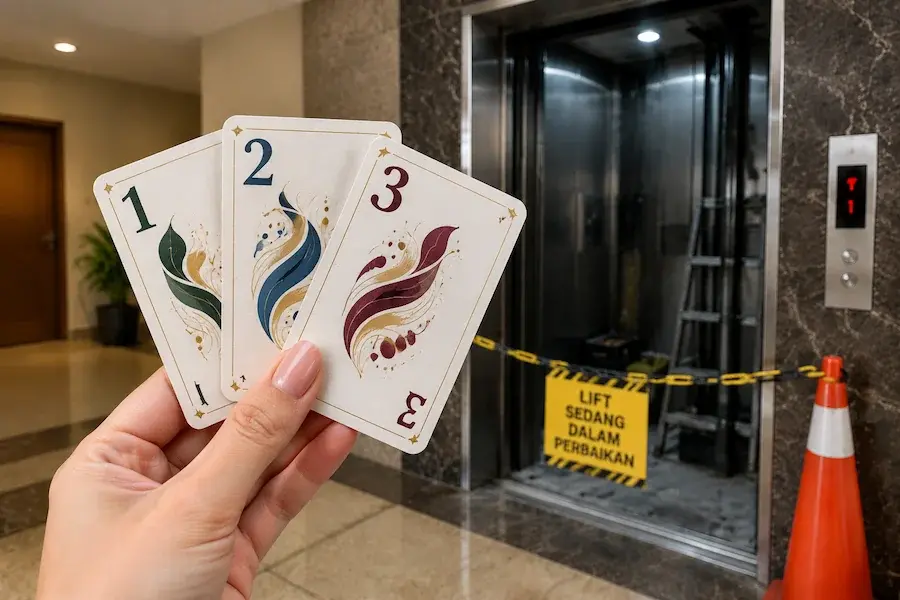
This review is important for promoting financial transparency within the Association of Owners and Residents of Condominium Units (P3SRS). Residents should not simply accept the expenditure figures presented in financial reports. They need to understand how these costs are calculated, what work the money is paid for, and whether the expenditure is proportionate to the services received. To get started, there are three practical indicators residents can use.
First, find the price of a new elevator to use as a benchmark. This information can help residents assess the logic behind the monthly maintenance costs they are charged. For example, suppose a new elevator costs approximately IDR 2 billion, while its maintenance costs reach IDR 1.5 billion per month. In such a situation, residents have good reason to question whether the costs are reasonable. How could the cost of maintaining a single elevator for one month amount to 75 percent of the purchase price of a new elevator?
If that amount is genuinely spent every month, the total would reach IDR 18 billion in one year. That figure is equivalent to nine times the purchase price of a new elevator in this example. Of course, this comparison is not proof that any irregularity has occurred. However, from an economic standpoint, such a substantial figure requires a strong, detailed, and verifiable explanation. Were major repairs, the replacement of key components, or special circumstances responsible for the increase in costs? Does the amount actually correspond to the work performed?

Residents can easily research the price of a single new elevator through Google, elevator suppliers' websites, or other relevant sources. This information provides a starting point for assessing whether the costs are reasonable. The review can then be extended to the maintenance contract, work details, service provider invoices, and payment records. The key point is not to accept a large expenditure figure simply because it appears in a financial report. Ask for a reasonable explanation and supporting evidence for the expense.
Second, search for the word 'elevator' in the financial report. This step helps residents determine whether elevator-related expenses are recorded under clearly identified and traceable accounts. Under the presentation and disclosure principles of relevant accounting standards, material information should be presented adequately so that users of financial reports can understand the transactions and costs incurred.
Check whether the report includes accounts such as elevator maintenance costs, building equipment maintenance, or other technical expenses that may include these expenditures. If elevator costs are not listed separately, this does not necessarily prove that an error or irregularity has occurred. However, residents should ask for an explanation of which account is used, the amount recorded, and the reason these costs have been combined with other expenses. Substantial elevator costs should not become difficult to identify simply because they have been included in an account with an overly general or obscure name.
Third, examine the Notes to the Financial Statements (CaLK). The main financial statements sometimes present expenditure categories only in summary form, making it difficult to identify elevator maintenance costs directly. The CaLK can provide details about specific accounts, accounting policies, or additional information needed to understand the figures presented in the financial statements.
If elevator costs are not explicitly mentioned, trace the accounts that may contain these expenses, then examine the relevant explanations in the CaLK. If the descriptions remain too general, request more specific details, such as the maintenance contract value, work period, type of service, and relevant payment records. This approach allows residents to assess whether the amounts paid genuinely relate to elevator maintenance or whether other expenditures require further explanation.
These three indicators are interconnected. The price of a new elevator provides a benchmark for evaluating the reasonableness of the costs, the financial statements show how the expenses are recorded, and the CaLK helps clarify information that is not visible in the main statements. If necessary, the review can be extended by matching the figures in the financial statements against contracts, service provider invoices, work details, and payment records.
Without residents' scrutiny of the financial statements, substantial P3SRS expenditures risk being managed without adequate examination. When residents simply pay their contributions without ever checking how the money is used, irresponsible individuals may have greater opportunities to manipulate budgets, conceal expenditures, or charge costs that are disproportionate to the work performed. The problem is not merely the amount of money spent, but also the lack of effective oversight over the use of shared funds.
Therefore, residents should not treat financial statements as mere formalities that only need to be accepted once a year. If you are unaware of even one of the three points above, namely the price of a new elevator as a benchmark, how elevator costs are recorded in the financial statements, and how those costs are explained in the CaLK, you face a significant risk because you lack sufficient information to oversee the use of funds and detect potential financial leakages. Financial statements must be read, scrutinized, and questioned whenever figures appear unreasonable or information cannot be traced. Resident oversight does not mean accusing every board member or building manager of wrongdoing. Rather, it means ensuring that every expenditure has a clear basis and can be properly accounted for.
Ultimately, P3SRS financial transparency cannot be achieved simply by distributing financial statements to residents. Transparency must enable residents to understand how their money is used, why the costs are necessary, and whether the amounts are reasonable. Do not stop at the figures presented. Examine the logic behind them, trace how they are recorded, and request supporting evidence whenever an expense raises doubts. When residents fail to oversee their own money, they also create opportunities for waste and misuse of funds that should serve the interests of the entire community.
Read other articles as well:
- The Unseen Emerges When Residents’ Voices Are Silenced
- Between Glue Intoxication and Residential Hallucinations
- Project Transparency in Communities
- Know Your IPL Rights and Obligations
- Magic Tricks in Community Expense Reports