

Trust Challenges in the Vertical Property Industry
The current property market is facing significant challenges related to consumer confidence. Vertical housing, which should be a modern solution for housing in a time of limited land, is now often caught in a whirlwind of tedious management conflicts. The emergence of various problems with the Sunter Park View apartment complex has served as a catalyst for the complexity of managing apartment buildings (Rusun) in Indonesia. This phenomenon is not an isolated case; reports of problems with the Green Pramuka apartment complex have consistently received widespread public and media attention for years, setting a negative precedent for vertical housing governance.
This undoubtedly has significant psychological and financial impacts on investors who previously had high hopes for rental income or capital gains. When disputes between residents and managers arise, the liquidity of these property assets tends to decline drastically. Investors are now required to be more discerning in monitoring the track records of developers and managers before deciding to allocate their capital to specific apartment projects.
Mapping Crisis Management in Strategic Areas.
A deeper dissection of cases across different regions reveals alarming similarities in the patterns of disputes. The Puri Park View apartment complex in West Jakarta and the Kemang View apartment complex in Bekasi are clear evidence that residents' dissatisfaction with management service standards is a systemic, unresolved issue. These conflicts typically stem from issues regarding the transparency of electricity, water, and sinking fund costs, which are never publicly reported to unit owners.

The escalation of this problem has even spread to East Java, as clearly seen in the report of the Bale Hinggil apartment problem in Surabaya. This condition is exacerbated by the emergence of complaints in new giant projects that have a very dense residential scale, one of which is the problem of the Tokyo Riverside PIK 2 apartment. Without an accountable management system from the start of the handover, the potential for friction between residents and the management formed by the developer will continue to haunt every vertical housing project in Indonesia.
Legal Analysis: Legitimacy and Responsibility of Management
The primary focus of almost all conflicts in the field boils down to one crucial issue: the legal responsibility of apartment managers for collecting environmental maintenance fees, or service charges. Legally, many residents have begun to question the legal basis for collecting these fees, particularly during the transition period, when the Association of Apartment Owners and Tenants (P3SRS) has not yet been officially established or approved by the local government.
Based on various critical reviews in national property "legal journals," the transition period often creates a loophole for lengthy and tedious legal disputes. Developers are often accused of delaying the formation of an independent P3SRS in order to maintain control over the management of buildings with significant revenue turnover. Without independent financial audits, residents often feel they are being exploited by managers without receiving commensurate services.
Government Intervention and Legislative Pressure
In response to this increasingly disturbing chaos, government agencies have begun to take proactive steps. For example, the South Jakarta city government has initiated mediation efforts regarding apartment management in several strategic areas of South Jakarta. This mediation is crucial to prevent unilateral actions, such as power and water cuts, which are often carried out by management against critical residents. Information regarding citizen complaint services can be accessed through the official portal DKI Jakarta.

On the legislative side, pressure on the executive branch to reform apartment management is also growing. Given the numerous complaints coming to the council, the Regional People's Representative Council (DPRD) has requested that the Acting Governor of Jakarta form a special team to resolve apartment management issues. The formation of this special team is expected to break the chain of permanent conflict by conducting factual verification of the P3SRS management and conducting investigative audits of the flow of resident contribution funds. This effort is expected to provide stronger legal protection for apartment owners, as stipulated in the latest regulations, which can be monitored through DPRD DKI.
Conclusion: Creating a Healthy Housing Ecosystem
With consistent mediation measures and the formation of a special team by the government, we all hope that in the future, there will be no more protracted issues regarding the Sunter Park View apartment complex or the Green Pramuka apartment complex without any legal certainty.
Transparency and strict compliance with regulations are key for investors and residents to ensure Indonesia's apartment ecosystem remains healthy, maintains competitive investment value, and provides a decent place to live for urban residents.
FAQ Apartment Disputes and Management Governance
1. What are the main causes of apartment management disputes in Indonesia?
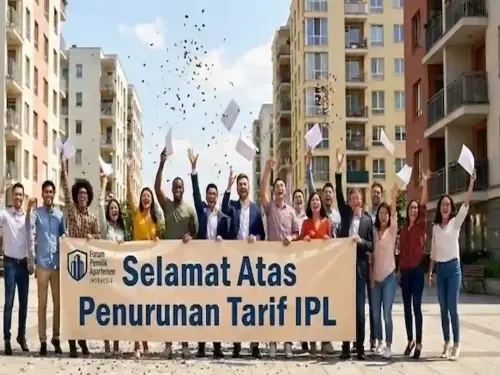
The main cause of apartment disputes is the lack of transparency on the part of managers in collecting IPL (Leasing Permit), electricity, water, and sinking fund fees, especially when the P3SRS (Planning for Residents) has not yet been established or approved. Without transparent financial reports and independent audits, residents often suffer losses, and conflicts are inevitable.
2. Do apartment managers have the right to collect IPL before the P3SRS is approved?
Withdrawing IPL before the P3SRS is officially approved often becomes a source of legal disputes because the basis of their authority is questionable. In many cases, managers continue to collect dues even though the P3SRS organization is not yet legitimate and recognized by the local government, potentially violating the rights of apartment residents.
3. What steps can residents take when a dispute arises over apartment management?
Residents can take collective action by demanding the establishment of an independent P3SRS, requesting a financial audit of dues, and filing complaints and mediation through the local government or the Regional People's Representative Council (DPRD) to prevent unilateral actions such as electricity and water disconnections.
Also read other articles:
- Uncovering the IPL Controversy and the Key Role of the PPPSRS
- Protest Against the Transparency of the Kalibata City RUTA P3SRS
- Actress Prilly Latuconsina Protests Strongly